
Why is my Car Shaking?
Car Maintenance Items you Should Always Leave to the Professionals
It used to be as common as falling leaves in autumn for people to work on their own cars. And while this red-blooded American pastime has not completely disappeared from our world, the expense and complexity of newer cars make some repairs best left to the professionals.
Here is a quick list of, "don't try this at home"' auto repairs:
1. Check Engine Diagnostics - With everyone from big box parts stores to smartphone app developers making it possible to talk to the computer in your car, many drivers think they can deal with a check engine light themselves. Here's the problem: many check engine codes are vague and require more sophisticated equipment to really get to the bottom of the story. And please, don't just turn the light off thinking you will fix the problem. This is like trying to cure a heart attack by unplugging the EKG. Let the pros read the codes, apply their educated ability to d ...[more]
Why You Should Never Skip a Tire Rotation
The cornering and rolling forces on each of your tires are different. If you have a front wheel drive car, the power and most of the force is transmitted to the front tires while the rear tires pretty much just follow along like fixed wagon wheels. A rear-wheel drive car or truck sends power to the back while steering forces are handled by the front wheels. All-wheel drive and 4wd have their unique power, steering and cornering characteristics as well.
The point is, your front left tire is going to wear differently than your right rear tire, or for that matter, any of the other tires vary at each corner of the vehicle because of the force and friction.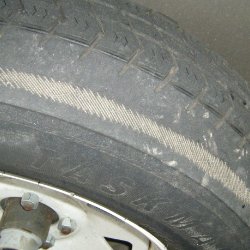
The solution to this problem is tire rotation. Tire rotation involves removing your wheels and tires from ...[more]
Archives
2020
2019
2018
2017
2016
2015
2014
Tags
