
Importance of Four Wheel Alignment
What is Four Wheel Alignment and Why is it Important?
Getting your wheels properly aligned can save you money, enhance handling, and make your vehicle safer and faster. Four wheel alignment is pretty much what it sounds like – making sure all four wheels are pointed in the right direction. Your car comes with a specific factory set-up and specifications. Overtime Accidents, normal wear, and tear, as well as road conditions, including potholes and curbs, can take their toll on your cars steering and suspension system, and disrupt the alignment settings.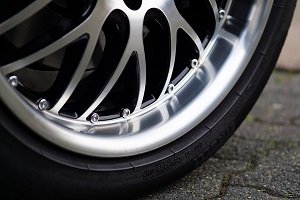
There are several ways of spotting when your wheels aren’t aligned as they should be. When your alignment is off, your tires are not pointing in the same direction. This wi ...[more]
Types of Car Batteries
You don’t put enough thought into your car batteries until it gives out. Then you think about how you just got this battery replaced a few months ago when in reality, it’s been three years. Your car battery does a lot for your car but has two important jobs. It exists mainly to start your car after you’ve turned it off. To start your engine, you need to create a spark to begin the ignition process. Your battery stores this energy to create the spark. The other job that your car battery does is to power the electrical components of your vehicle. This includes your headlights, your cabin lights, your radio, your dashboard, your window control, your mirror alignment and much more.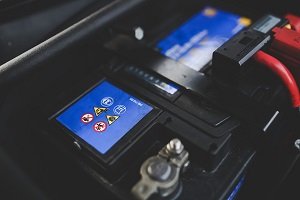
...[more]
Our Spring Auto Maintenance Checklist
 As winter beings to wind down, it’s time to look ahead towards spring. Temperatures will rise, spring will be in the air, and the weather is going to get a little unpredictable from one day to the next, with sunny skies one day and thunderstorms the next. Does your car have what it takes for spring and summer driving? Let’s do a quick checklist:
Spring Auto Maintenance Checklist
Will You Bet On Your Brakes?
Brakes are one of the most important parts of your vehicle. They can mean the difference between being able to stop when the vehicle in front of you stops short and getting into an accident. Here are some helpful tips and information you can use to keep your brakes in tip-top shape.
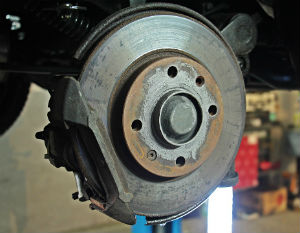
These tips alone can help with preventing wear and tear of your brakes. You should also routinely have your brake fluid checked and replaced when it is recomme ...[more]
Driving is Dangerous
Most of us at one point or another will experience a car crash of some kind. Believe it or not, driving is one of the most dangerous things that we do. Milstead Automotive understands what our customers go thru after an automobile crash. Here are a few tips on what to do from the moment of the accident until your vehicle is in the shop for repairs.
Move the vehicle out of the road or away from oncoming traffic! 
So many injuries are sustained from secondary collisions. As soon as you safely can move your vehicle away from traffic so no one else and hit your vehicle or hit someone else while avoiding you. Once you are out of harm’s way, shift your car into park and turn on your hazard lights
How To Maintain A New Car
So you got a new set of wheels – congratulations! You’re going to want to hang onto it as long as possible, so you’ll want to keep it maintained as well as you  can. Here are some suggestions:
First, read the owner’s manual carefully and stick to manufacturer’s recommendations for service intervals. There are certain things that are critical enough that failure to adhere to recommendations can void a new car warranty. Don’t let that happen!
For instance, just about every manufacturer recommends synthetic oil for their engines; it provides better protection in just about every respect, and it’s more stable at high and low temperatures. If your owner’s manual prescribes a 10,000-mile oil change, stick wi ...[more]
Your Car’s an Investment – Protect It
You rely on your car every day, and you have a lot of money tied up in it. It’s probably one of the more valuable things you own…so make sure you get the most out of that investment:
Oil changes: Changing your motor oil at regular intervals will ensure long engine life by cutting wear and friction and helping to prevent the buildup of sludge  and carbon on internal engine assemblies.
Cooling system: Older cast-iron engines could overheat with no serious consequences, but not so with today’s aluminum blocks and heads. Your engine’s coolant has a finite life and should be changed and flushed at regular intervals to prevent accumulation of scale and corrosion in the radi ...[more]
Regular, Synthetic or Blend...What Kind of Oil Do I Need?
 At one time, there were only a couple of choices for motor oil. Today, that is no longer the case, and hasn't been for quite some time. Here's a quick breakdown of what you need to consider when it's time for an oil change:
- Viscosity: Viscosity is how thick your oil is, and how it retains its pour properties at various temperatures. In this respect, synthetic oil is far superior. Conventional oils will thicken in cold weather and thin out when very hot, while the viscosity of synthetic is much more uniform. Check your owner's manual -- many newer models require a thinner, lower-viscosity oil, which also helps the engine run more efficiently. Viscosity is expressed as a numerical value -- t ...[more]
Differential Service: Too Often Neglected by Drivers

Winter Safety Tips – Don’t End Up In the Ditch!

| 12 | Next >> |
Archives
2020
2019
2018
2017
2016
2015
2014
Tags
